It is truly difficult to try and explain all of what acupuncture is in just one short online blurb.
In one paragraph, how do you sum up over 4,000 years of ancient knowledge?
How do you give justice to this craft?
How do you encapsulate an entire medicine, tradition, philosophy, and way of moving through the world in what is expected here—an “elevator pitch”?
I haven’t quite figured out how to do this yet.
I haven’t figured out how to give words to a medicine that has changed my life.
A medicine that has guided me to see the world—and myself—in a new light, with more awareness, flow, and ease.
In my opinion, with our Western-conditioned minds, this medicine must be felt, not just read.
I will say, however, it is not some kind of voodoo magic. I also have a Western mind. I love science, biology, and biochemistry. I think it’s beautiful that I can understand acupuncture from a physiological perspective, and also from an emotional and spiritual one.
What truly makes this medicine so beautiful, so effective, and so deeply holistic is the blending of Eastern and Western philosophies—the body, mind, and spirit working together.
And okay… I lied.
There might be a little bit of magic.
But for anyone who does want the elevator pitch, here are a few things to know—and a few things to expect.
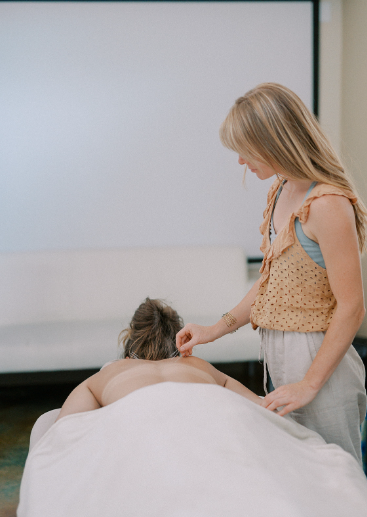
Acupuncture is an ancient healing practice rooted in Chinese medicine. We use very thin needles placed at specific points on the body to restore balance and support the body’s natural healing processes. Through a series of diagnostic questions and assessments, we begin to understand which systems in the body may be out of balance.
Sometimes that looks like physical discomfort, such as injuries or joint pain.
And sometimes it shows up in more internal ways—like the digestive system struggling to process food or fluids, or on a spiritual level, where we arn’t emotionally processing life— and that is showing up as digestive issues.
Whatever it may be, talking about this together—first and foremost—brings our patterns into awareness—and ignites the ripple effect that then creates lasting change
From there, we connect with the body through acupuncture, and sometimes additional therapies like gua sha, moxibustion, or cupping. These treatments work by stimulating the nervous system, improving circulation of blood and lymph, and supporting the body’s natural processes of repair and removal of waste.
In sports acupuncture, we use specific points on muscles—called motor points—to help activate muscles that are underworking, or release ones that are shortened or overactive. This approach helps to repair tissue, increase collagen production, increase blood flow, prevent overuse injuries and shorten recovery time.
Appointments are typically 45 minutes to 1 hour. After the needles are inserted, patients are typically left to rest for about 20–30 minutes. Most people enter a deeply relaxed, meditative state, and many drift into sleep.
You can expect to leave treatment feeling calm, grounded, and sometimes a little sleepy. With orthopedic acupuncture, you can expect to feel a bit sore for up to 2 days as everything releases.
What is Acupuncture?
What Is Community Acupuncture?
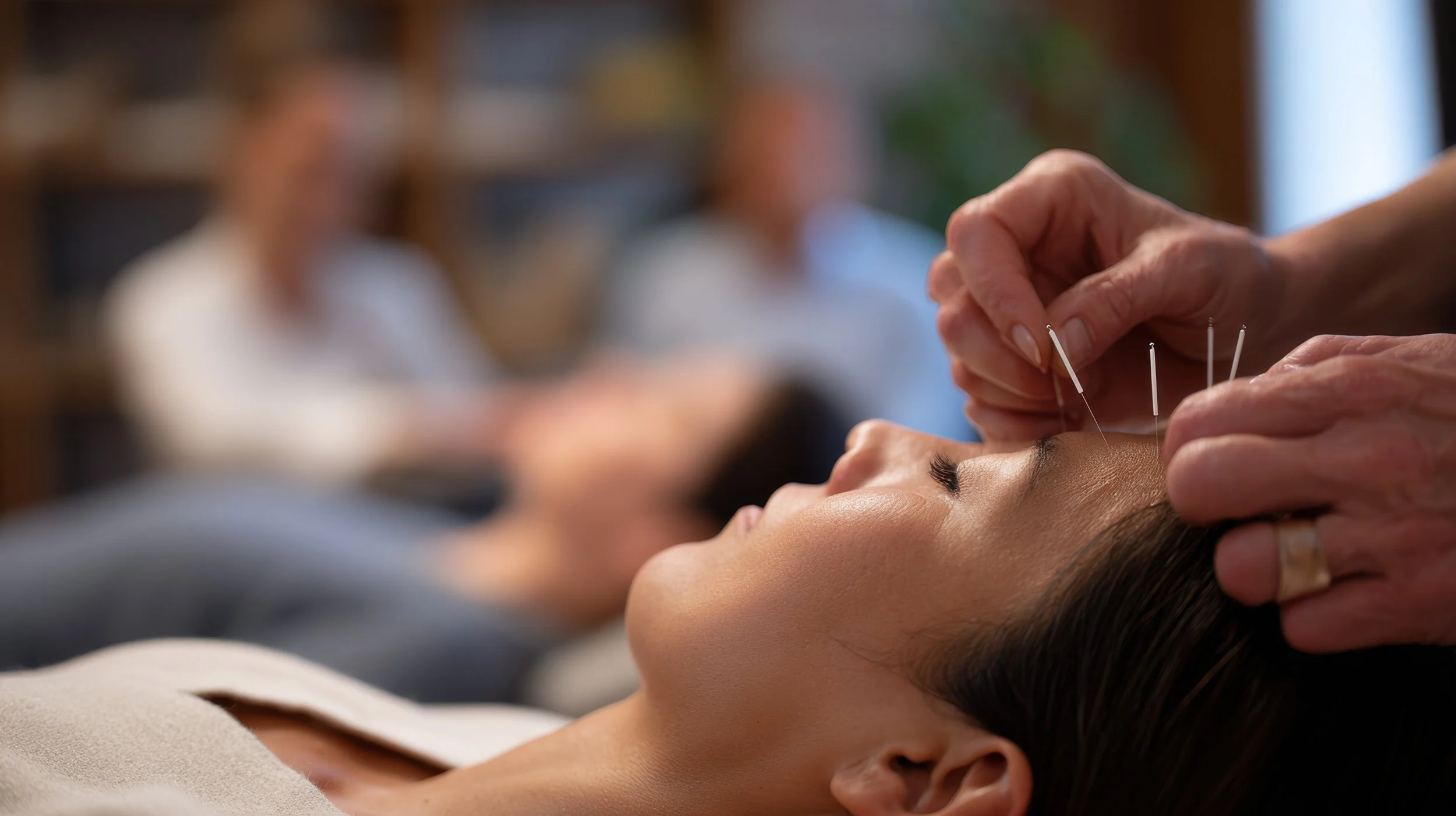
Community acupuncture is a model of care designed to make acupuncture more accessible, affordable, and part of everyday life. Treatments are offered in a shared, quiet space where multiple people can receive care at the same time. This approach allows the cost of treatment to be lower while maintaining high-quality, individualized care.
There is something uniquely supportive about healing in community. In many traditional settings, acupuncture was practiced this way—people gathering together to rest, breathe, and receive treatment side by side. The shared environment often feels calming and grounding, creating a collective sense of ease that can deepen relaxation and support the nervous system.
Community acupuncture is especially helpful for people who benefit from more frequent treatments, such as those managing chronic pain, recovering from injury, navigating stress or burnout, or seeking preventative care. It reflects a simple but powerful philosophy: healthcare should be sustainable, consistent, and available to everyone.
This model honors both ancient tradition and modern practicality—bringing people together in a space where healing is not only personal, but shared.
Treatments are in a shared room with 2-3 other people. Each treatment is approximately 45 minutes to 1 hour. Please wear loose fitting clothing. Treatments are done on massage tables, so most areas of the body can be accessed in a comfortable way.
Any questions?
Send us a quick message. :)